A sourdough starter is incredibly resilient, but it does require regular care. This is why so many people name their starters – they truly feel like a member of the family!
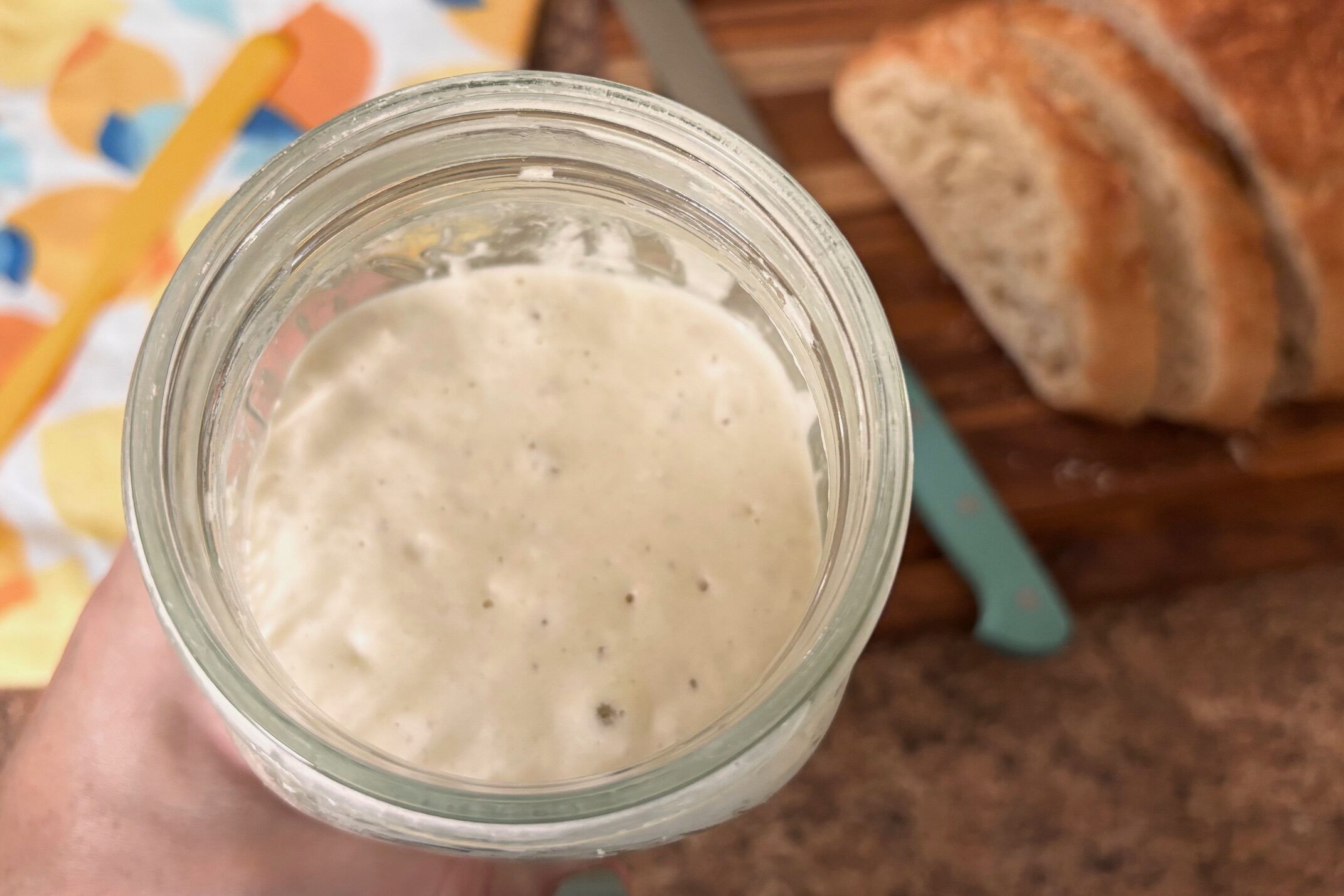
However, sometimes life gets in the way and taking care of a sourdough starter is the least of your concerns. Often, a weird smelling starter or one that looks a little funny can be salvaged and brought back to life. Other times, it’s best to throw it out and start over. Here’s what to look for, and how to handle it:
1. Visible Mold Growth
- What You See: Green, black, pink, or orange fuzzy spots on the surface or inside the starter.
- Why It’s Bad: Mold can penetrate deep into the starter, making it unsafe to use.
- Solution: If there’s mold, discard the starter and start fresh.
2. A Strange or Unpleasant Smell
- What You Smell: A rotten or ammonia-like smell
- Why It’s Bad: While a tangy smell can be normal and indicate the starter is hungry, a rotten or strong ammonia smell indicates harmful bacteria have taken over.
- Solution: A healthy starter should smell tangy, fruity (mine reminds me of bananas), or mildly yeasty. If the odor is offensive, try feeding your starter. If the bad smell doesn’t go away after a few hours, discard the starter and start over.
3. Pink or Orange Tint
- What You See: A pink, orange, or red hue on the starter’s surface.
- Why It’s Bad: This is a sign of contamination from harmful bacteria.
- Solution: A discolored starter should be thrown out immediately.
4. No Activity After Multiple Feedings
- What You See: No bubbles, rise, or sign of fermentation even after consistent feeding for 3–5 days.
- Why It’s Bad: If the starter shows no activity at all, it most likely has no active yeast and bacteria left and may be too far gone.
- Solution: Try putting it somewhere slightly warmer than where you’ve had it. You can also try feeding it with bread or rye flour if you haven’t already. If it’s still unresponsive despite warmer temperatures and stronger flour, discard it and start fresh.
6. Fruit Flies or Other Insects
- What You See: Insects, bugs, or foreign objects in your starter.
- Why It’s Bad: This poses a health risk, and cleaning or discarding part of it won’t make it safe.
- Solution: Discard and start fresh. Be sure to sanitize your container and use a more secure lid.
When It’s Still Salvageable:
Sourdough starters are pretty resilient. A thin layer of hooch (clear liquid), a slightly tangy smell, or mild inactivity is normal and your starter will most likely be brought back to life with a feeding or two.

If you’re ever unsure, err on the side of caution. I highly recommend keeping some of your starter dried to re-activate. Simply take a few tablespoons and spread it out in a thin layer on parchment paper, allow to air dry (this can take a day or two depending on how thinly it is spread), and then break into small pieces or grind down. Store in an airtight container away from light, heat, and moisture, and it will most likely last for years. To re-activate, see my instructions here.
Leave a Reply